Prompting Users For App Ratings, Reviews, and Responses
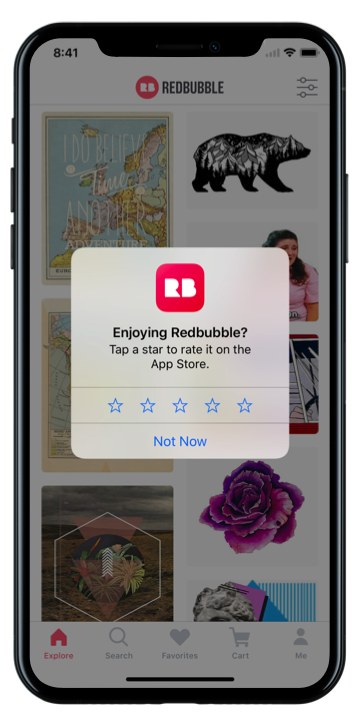
Asking users to "Rate this app!" got a whole lot better as of iOS 10.3. Apple released changes which enable users to rate apps without breaking flow and bouncing out to the App Store.
How it works
You can now call requestReview(), and Apple may then display a generic prompt asking users to rate & review your app — right there, in place.
Apple's guidance
- Only ask users after they've found value
- Don't interrupt critical flows
- Don't be a pest — ask once
How we did it
- We ask users to review after 30 minutes — by then you understand the value ✔️
- We only ask in low-intent experiences, so we don't interrupt ✔️
- We ask once. No pestering ✔️
- Not to mention we spent 9 months building the Redbubble app ⌛️
Why ratings & reviews matter
Ratings and reviews help us build a better product. At Redbubble we get feedback on what's working and what's frustrating users, and we use it to better prioritise and understand what's important to them.
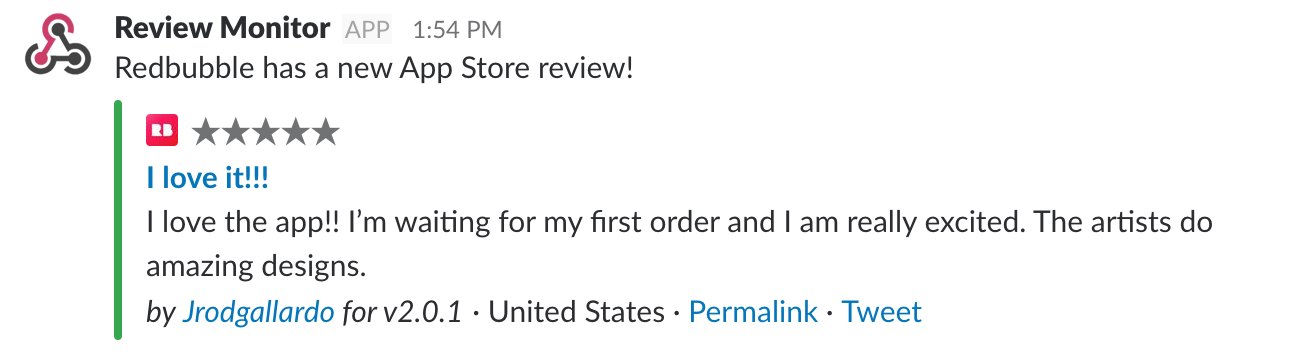
Ratings and reviews also help users make decisions about the quality of an app before deciding to download — more on that below.
What we learnt using in-app reviews
After adopting ratings & reviews in iOS 10.3 we saw three fundamental changes in user behaviour:
- a significant lift in the volume of ratings & reviews
- an increase in our star rating (48% ⬆️)
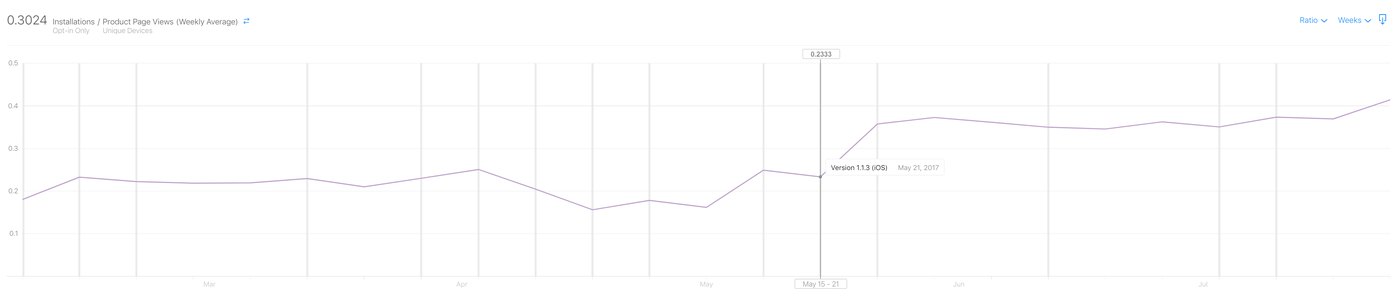
- improved install conversion from the App Store to app units (66% ⬆️)
More reviews 📈
By prompting users after 30 minutes we got a significant lift in the number of reviews & ratings. This didn't change the distribution of ratings — it continued to hold at 3.3 stars.

A better rating 🌟
When users rated the app without leaving a review, we saw a shift from our 3.3 star average to 4.7 stars. By the end of May we held a 5 star rating in the United States and a 4.7 star average across all other territories.

More installs 👩💻
How did going from 3 to 5 stars impact downloads? We saw a 48% lift in conversion of users viewing the Redbubble App Store product page to installing the app.
Conclusion
Requesting ratings, reviews and responses in iOS 10.3 surpasses previous best practices. Getting it right can have a material impact on the number of reviews, your star rating and download volume.
Remember though — there's no substitute for a great experience. Focus on building something that solves the problems you set out to, and only then think about how best to ask your users to rate & review your app.
Thanks for reading! 👋